Why an Outfit Looks Fabulous on Someone Else (But Not on You)
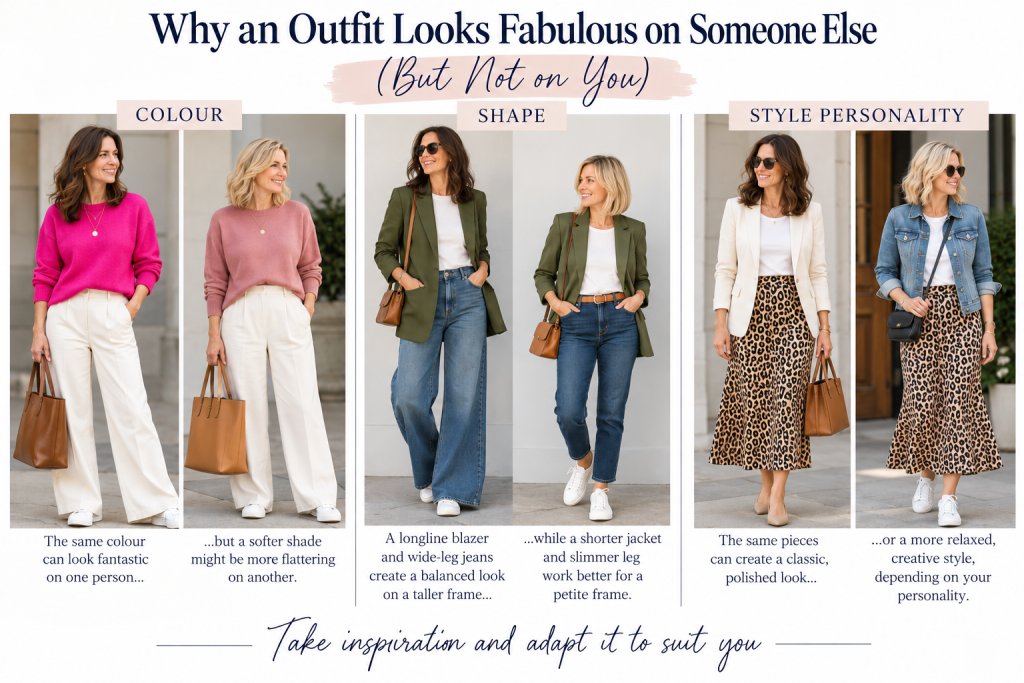 Have you ever spotted someone wearing a gorgeous outfit, thought “I love that!”, bought something similar, and then wondered why it doesn’t look quite as good on you?
Perhaps the colour seems to drain your complexion, the trousers don’t sit quite right, or the whole outfit feels as though you’re playing dress-up rather than being yourself.
The good news is that there’s nothing wrong with you, and it doesn’t necessarily mean you’ve chosen the wrong clothes. It simply means that what works beautifully for one person won’t automatically work for another.
There are three key ingredients to consider when putting together an outfit that really works for you: colour, shape and style personality.
Understanding these can transform the way you shop, help you make better use of your wardrobe and, most importantly, make getting dressed a whole lot easier.
1. Colour: Why the Right Shades Make All the Difference
Colour is often the first thing we notice about an outfit. A beautiful red coat, a striking green jumper or a soft neutral combination might catch your eye, but the colour that makes someone else look radiant may not have the same effect on you.
This is because we all have different natural colouring, including our skin tone, hair colour and eye colour. The colours we wear close to our face can influence how fresh, bright and healthy our complexion appears.
The right colours can help your skin look clearer, your eyes appear brighter and your overall appearance more harmonious. Colours that are less suited to you may emphasise shadows, make your complexion look uneven or leave you looking a little washed out.
It’s not simply a question of whether you suit warm or cool colours. The depth and intensity of a shade matter too. Some people look wonderful in clear, bright colours, while others come alive in softer, more muted shades.
How to borrow someone else’s look:
- Keep the colour, change the shade. If you love a bright pink outfit but find the colour overpowering, try a softer rose or a deeper berry instead.
- Move an unflattering colour away from your face. If you love a particular shade but it doesn’t flatter your complexion, try it in trousers, a skirt or a bag rather than a top or jacket.
- Use accessories to introduce colour. A scarf, necklace or handbag can bring a colour combination into your wardrobe without committing to a whole outfit.
- Look beyond the colour name. Two shades of blue, for example, can have very different effects. Consider how light, dark, bright or muted the colour is, rather than simply deciding that blue suits you.
Knowing your most flattering colours makes it much easier to recreate outfits you admire while choosing shades that help you look and feel your best. If you’re not sure which your colours are, consider having a colour analysis.
2. Shape: Getting the Proportions Right for You
Have you ever tried on a pair of wide-leg trousers that looked effortlessly chic on someone else, only to find that they overwhelm you? Or bought a beautifully tailored jacket that seems to make your proportions look unbalanced?
The difference may lie in body shape, proportions and the way a garment fits your frame.
We all have different body shapes, shoulder widths, waist definitions, hip proportions and leg lengths. We also vary in height and in the relationship between our torso and legs. These differences influence how clothes hang on us and how an outfit looks as a whole.
For example, a longline jacket might create an elegant silhouette on someone with long legs, while a shorter jacket could be more flattering on someone with a longer torso or shorter legs.
Similarly, wide-leg trousers can look fabulous on a petite woman, but the cut, fabric, waist position and length all need to work together. It’s not about avoiding particular styles because of your height or size; it’s about finding the version that creates the proportions you want.
How to borrow someone else’s look:
- Focus on the silhouette, not the exact garment. If you love the balanced proportions of an outfit, you may be able to recreate them with a different jacket length or trouser shape.
- Pay attention to where clothes finish. The length of a top, jacket or skirt can make a surprising difference to the overall balance of an outfit.
- Try different ways of defining your waist. A full tuck, half tuck, cropped top or belt can change the proportions of an outfit without buying anything new.
- Consider the fabric. Fluid fabrics create a different effect from crisp, structured ones, even when the garment has a similar cut.
- Don’t rule out a style because it didn’t work once. A different rise, cut, fabric or length might be exactly what you need.
The aim isn’t to disguise your body or follow rigid rules. It’s to understand how different shapes and proportions work together so that your clothes feel comfortable, look balanced and reflect the image you want to create. A style consultation will arm you with the information you need to dress in a way that flatters your shape, scale and proportions.
3. Style Personality: Does the Outfit Feel Like You?
This is perhaps the most overlooked reason why an outfit can look wonderful on someone else but feel completely wrong on you.
Imagine two women wearing the same jeans and white shirt. One adds a classic blazer, leather loafers and a structured handbag. The other chooses trainers, a denim jacket and a colourful crossbody bag.
The basic ingredients are similar, but the overall impression is quite different.
One look is polished and classic; the other is relaxed and casual. Neither is better than the other. They simply express different style personalities.
Your style personality is the combination of details that makes your clothing feel like you. You might be drawn to classic tailoring, relaxed natural fabrics, feminine details, contemporary minimalism, dramatic statement pieces or a creative mix of colours and patterns. Most of us are a combination of several styles.
When an outfit doesn’t reflect your personality, you may feel uncomfortable even if the clothes fit beautifully and the colours suit you. Perhaps the look is too formal, too feminine, too quirky or simply too understated for your taste.
This can be particularly relevant in midlife, when our lifestyles, priorities and sense of identity may change. The clothes that felt right ten or twenty years ago might no longer reflect who we are today.
How to borrow someone else’s look:
- Identify what attracts you to the outfit. Is it the relaxed feel, the elegant simplicity, the interesting accessories or the combination of textures?
- Keep the elements that reflect your personality. If you love the outfit’s simplicity but prefer a more contemporary look, try swapping traditional accessories for modern trainers or sculptural jewellery.
- Change the finishing touches. Shoes, bags, belts and jewellery can completely alter the mood of an outfit without changing the main pieces.
- Mix styles to make a look your own. Try pairing a feminine dress with chunky boots, or smart tailored trousers with a relaxed knit and trainers.
- Think about your real life. An outfit might look beautiful on a fashion influencer, but if your everyday life involves dog walks, working from home or meeting friends for lunch, you’ll probably want to adapt it to suit your lifestyle.
The most stylish women aren’t necessarily those who follow every trend. They’re often the ones who understand what they love, what suits them and how to put those things together in a way that feels authentic.
How to Take Inspiration Without Copying the Whole Outfit
The next time you see an outfit you love in a magazine, on social media or on someone you pass in the street, resist the temptation to recreate it exactly.
Instead, try this simple five-step approach.
Step 1: Work out what you love about it.
Is it the colour combination, the silhouette, the proportions, the layering or the overall mood? Being specific helps you identify what you actually want to recreate.
Step 2: Check whether the colours work for you.
Could you use the same combination in shades that flatter your own colouring? For example, if you love a camel-and-cream outfit but find camel too warm near your face, you could try a cooler taupe with a soft white instead.
Step 3: Adapt the proportions.
Consider how you could achieve a similar silhouette with cuts and lengths that work for your frame. You might choose a shorter jacket, a higher-waisted trouser or a different skirt length.
Step 4: Add your own style personality.
Think about the shoes, accessories and finishing touches that would make the outfit feel like you. A classic look can be made more relaxed, while a casual outfit can be elevated with a beautiful bag or statement jewellery.
Step 5: Shop your wardrobe first.
Before buying anything new, look for pieces you already own that capture the same idea. You might discover that you have all the ingredients for a new outfit, just waiting to be combined differently.
This approach is also a useful way to avoid impulse purchases. Rather than buying something because it looks fabulous on someone else, you’ll have a clearer idea of how it will work with your existing wardrobe.
The Secret to Looking Stylish Is Knowing What Works for You
Style isn’t about having the perfect body, wearing the latest trends or copying someone else’s look from head to toe.
It’s about understanding the relationship between your colouring, your proportions and your personal style, then using that knowledge to make clothes work for you.
When these three elements come together, getting dressed becomes easier. You can shop with greater confidence, make better use of the clothes you already own and develop a wardrobe that feels both flattering and authentic.
And remember, you don’t need to get everything right every time. Experiment, try new combinations and have fun discovering what works for you.
Ready to Discover Your Own Style?
If you’d love to understand which colours flatter you, which shapes and styles work best for your proportions, and how to create outfits that reflect your personality, a personal styling consultation can help you join the dots.
At My Personal Style, I help women aged 40+ discover the colours, cuts and styles that make them look fresher, feel more confident and enjoy getting dressed again.
Whether you’d like a colour analysis, a style consultation or a complete style and confidence makeover, I’ll help you understand what works for you, so you can stop comparing yourself with others and start making your wardrobe work harder for you.
Get in touch to find out more about my personal styling and colour analysis services in Hampshire.